Agent Assist is an AI-powered tool designed to support call center agents in real time by providing contextual suggestions, automated responses, and relevant information during customer interactions. If you want to understand more about what is Agent Assist, it essentially enhances agent efficiency, reduces call handling time, and improves overall customer experience. With innovations like this, the future of call centers with AI is rapidly evolving, enabling businesses to deliver smarter, faster, and more personalized support at scale.
In today’s competitive environment, companies are exploring high-performance computing solutions to manage large volumes of customer interactions more effectively. These tools provide advanced processing capabilities that allow agents to access insights instantly, improving both response times and customer satisfaction. Leveraging next-generation supercomputer platforms, call centers can process complex datasets, analyze trends, and anticipate customer needs before they even ask.
On the marketing side, integrating AI-driven support like Agent Assist can complement strategies discussed in advanced marketing tactics for customers, helping businesses refine messaging while agents remain supported by real-time AI suggestions. Similarly, agencies focusing on digital marketing approaches for customer engagement find that AI-assisted interactions can enhance campaign personalization and improve overall brand loyalty.
From a financial perspective, AI tools for call centers are becoming essential in top financial management resources for businesses, enabling companies to optimize operational costs while maintaining high-quality service. By combining AI insights with human expertise, organizations can create a more seamless experience for customers and a more productive environment for agents.
Overall, understanding what is Agent Assist in conjunction with modern AI strategies demonstrates how technology is transforming the customer service landscape, bridging gaps between efficiency, personalization, and intelligent automation.
Top 10 AI Agent Assist Platforms for Call Centers
Understanding what is Agent Assist is crucial for modern call centers looking to improve efficiency, reduce call handling time, and enhance customer experience. AI-powered platforms can provide real-time suggestions, automate repetitive tasks, and support agents with relevant information during customer interactions. Here are the top 10 AI Agent Assist solutions available today:
1. Bright Pattern
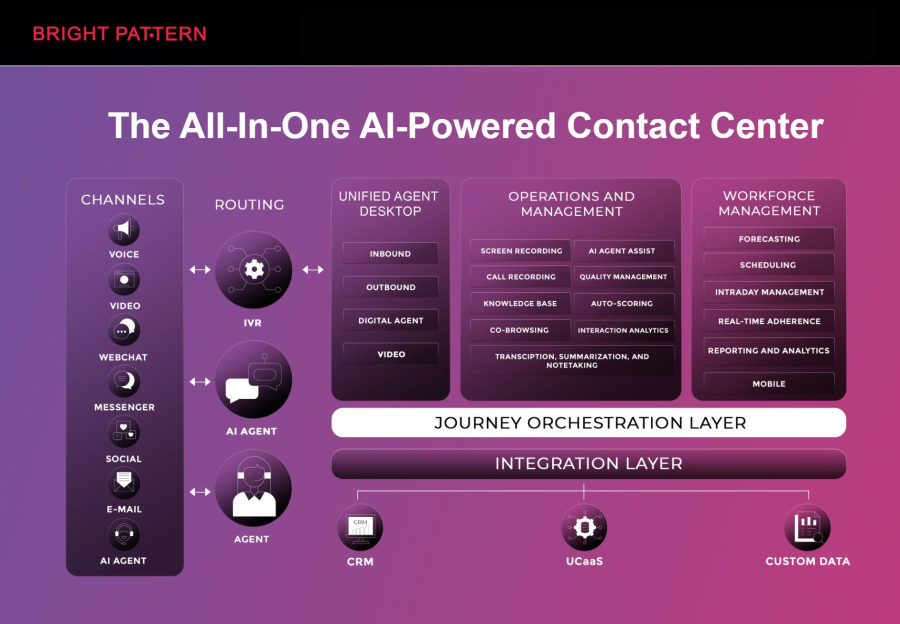
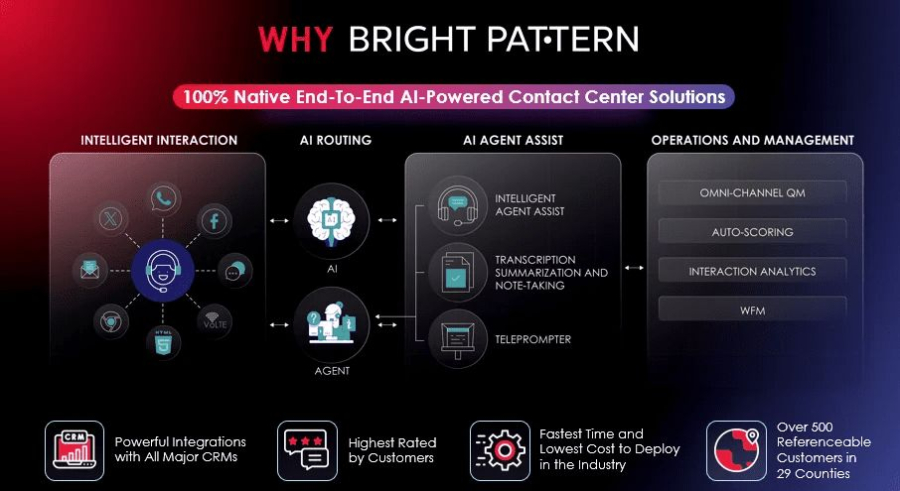
Bright Pattern stands out as a leading AI Agent Assist platform designed to empower call center agents and improve overall customer satisfaction. It offers a seamless combination of AI automation and human support, making it easier for agents to handle complex inquiries efficiently.
Key Features:
- Real-time AI suggestions to guide agents during calls
- Automated responses for repetitive questions
- Integration with multiple communication channels (voice, chat, email, social media)
- Advanced analytics for performance monitoring and reporting
Benefits:
- Reduces average handling time and increases first-call resolution
- Improves agent productivity by providing contextual information instantly
- Enhances customer satisfaction with personalized, AI-assisted interactions
Bright Pattern’s intuitive interface ensures that even agents with minimal technical knowledge can leverage AI tools effectively, making it a top choice for businesses exploring what is Agent Assist in their customer service strategy.
2. Genesys
Genesys provides a robust AI-powered agent assist solution that helps call centers streamline customer interactions and improve operational efficiency. It features real-time guidance, automated workflows, and predictive analytics.
3. Five9
Five9 integrates AI Agent Assist to help agents resolve customer queries faster. Its capabilities include intelligent routing, conversation analytics, and automated response suggestions.
4. Talkdesk
Talkdesk offers an AI-assisted platform that supports agents by delivering contextual recommendations, sentiment analysis, and workflow automation to ensure higher productivity.
5. NICE inContact
NICE inContact combines AI Agent Assist with cloud contact center solutions, offering agents real-time insights, predictive guidance, and actionable recommendations during calls.
6. Amazon Connect
Amazon Connect leverages AI-driven tools to provide agents with relevant information, call summarization, and proactive recommendations for better customer interactions.
7. Twilio Flex
Twilio Flex includes AI Agent Assist features that help agents respond faster by analyzing customer interactions, providing intelligent suggestions, and streamlining multi-channel communication.
8. Zendesk
Zendesk integrates AI support to deliver automated prompts, knowledge base recommendations, and conversation insights that assist agents during customer interactions.
9. HubSpot Service Hub
HubSpot Service Hub uses AI to help agents provide accurate, real-time answers, reducing manual research and enhancing overall service quality.
10. Freshdesk
Freshdesk’s AI Agent Assist enables smarter ticket management, automated responses, and contextual guidance, allowing agents to focus on complex customer issues.
Agent Assist Explained in Simple Terms
Agent assistis a set of AI-powered tools that support human customer service agents during live conversations. It listens to or analyzes interactions as they happen and provides real‑time guidance, suggested responses, knowledge articles, and next‑best actions.
The key idea isaugmentation, not replacement. Agents remain in control of the conversation and make final decisions, while the AI handles the heavy lifting of searching, summarizing, and recommending.
Agent assist can be used in:
- Call centers and contact centers
- Live chat and messaging support
- Email and ticket-based workflows
- Field service, technical support, and internal help desks
How Agent Assist Works
While every implementation is different, most agent assist solutions follow a similar pattern.
1. Capturing the interaction in real time
- Voice callscan be transcribed in real time into text.
- Chat, messaging, and emailare analyzed directly as text.
This gives the AI a live view of what the customer is asking and how the agent is responding.
2. Understanding intent and context
The AI uses natural language processing to identify:
- The customer’sintent(for example, billing question, password reset, product issue).
- Importantentitieslike order numbers, plan types, or product names.
- Thesentimentand urgency of the conversation.
- Relevanthistory, such as previous contacts and open tickets, when available.
3. Searching knowledge and systems
Once the AI understands what is happening, it searches across connected information sources, such as:
- Knowledge bases and FAQ documents
- Product and policy documentation
- CRM or ticketing systems
- Past conversations and resolved cases
Instead of forcing agents to manually look up answers in multiple tools, agent assist does the searching and filtering for them.
4. Suggesting actions to the agent
The system then surfaces helpful, context‑aware suggestions directly in the agent’s workspace, such as:
- Suggested replies or message drafts the agent can edit and send.
- Relevant knowledge articles or step‑by‑step procedures.
- Prompts to verify compliance steps or disclosures.
- Recommendations for next steps or cross‑functional hand‑offs.
The agent stays in control at all times, reviewing and approving suggestions before acting.
5. Learning and improving over time
Modern agent assist tools typically learn from:
- Which suggestions agents accept, edit, or ignore.
- Conversation outcomes, such as resolution and satisfaction.
- Quality reviews and supervisor feedback.
Over time, this allows the system to become more accurate, more relevant, and better aligned to your policies and tone of voice.
Core Capabilities of Agent Assist
Agent assist platforms can offer a wide range of features. The most common and impactful capabilities include the following.
Real‑time knowledge suggestions
The system automatically surfaces the most relevant articles, guides, or troubleshooting flows as the customer describes their issue. This reduces time spent searching and helps standardize answers.
Suggested responses and drafting
Agent assist can propose ready‑to‑send responses for chat, messaging, or email. Agents can edit for nuance, then send with a click. This dramatically speeds up repetitive or complex replies while ensuring alignment with brand tone.
Next‑best action recommendations
Instead of leaving every decision to the agent, the AI can suggest what to do next, for example:
- Escalate to a specialist team.
- Offer a particular solution or compensation within defined limits.
- Walk through a specific troubleshooting path.
- Verify security or compliance details.
Automatic call and chat summarization
After a call or chat, agent assist can auto‑generate a clear summary, including key details like:
- Customer’s issue and context.
- Actions taken during the interaction.
- Agreed next steps or follow‑ups.
Agents can then quickly review and adjust the summary before saving it, significantly reducing after‑call work.
Real‑time coaching and guidance
Some solutions provide live coaching prompts, such as:
- Reminders to show empathy when sentiment turns negative.
- Tips to slow down or clarify explanations.
- Prompts to follow required scripts in regulated industries.
This type of support helps even new agents sound like experts.
Automated documentation and tagging
Agent assist can suggest or auto‑apply:
- Disposition codes and categories.
- Tags for topics, products, or channels.
- Internal notes about the conversation.
Better documentation creates a richer dataset for analytics, quality, and further AI improvements.
Benefits of Agent Assist for Your Organization
When implemented thoughtfully, agent assist can reshape both customer and agent experiences in powerful ways.
Faster handle times and quicker resolutions
Because agents are not constantly searching for information, they can focus on the customer. Real‑time knowledge and suggested workflows reduce time spent on each contact and help more customers get resolved on the first interaction.
Higher consistency and quality of service
Agent assist encourages consistent, policy‑aligned responses. Even when customers speak to different agents, they receive similar, accurate information, which strengthens trust and brand reputation.
Shorter onboarding and training periods
New agents no longer need to memorize every policy, product detail, or edge case. The AI guides them step by step, acting like a real‑time mentor. As a result, teams can bring agents to proficiency faster while maintaining quality.
Reduced agent stress and burnout
Customer service work can be demanding. Agent assist takes away much of the cognitive load of searching, remembering, and documenting, so agents can focus on the human side of support. This improves day‑to‑day satisfaction and can reduce turnover.
Better customer experience and satisfaction
Customers feel the difference when agents respond quickly, clearly, and confidently. They spend less time on hold, repeat themselves less often, and experience smoother hand‑offs. Over time, this leads to higher satisfaction and loyalty.
Operational efficiency and cost control
By helping agents resolve more contacts per hour with fewer errors and escalations, agent assist supports leaner operations. It does not eliminate the need for humans, but it makes every agent significantly more effective.
Real‑World Use Cases for Agent Assist
Agent assist can add value in many different environments and industries. Here are some common scenarios.
Technical support and troubleshooting
For complex products or services, the AI can quickly surface step‑by‑step diagnostic guides based on the issue described, and highlight likely causes and solutions. Agents spend less time searching and more time solving.
Billing and account inquiries
When customers ask about charges, plan details, or payment issues, agent assist can pull up the right policies, calculate options, and suggest compliant ways to explain them in plain language.
Regulated industries such as finance and healthcare
In highly regulated environments, agents must follow strict scripts and disclosures. Agent assist can:
- Prompt agents to read specific statements.
- Highlight missing information that must be collected.
- Flag potential compliance risks for review.
Sales and retention conversations
Agent assist can suggest offers, upgrades, or retention tactics based on customer history and conversation signals, helping agents have more relevant and persuasive conversations while staying within policy.
Internal help desks and IT support
Within large organizations, internal support teams can use agent assist to quickly reference documentation, past incident resolutions, and configuration guides, providing faster help to employees across departments.
Agent Assist vs. Chatbots and Full Automation
Agent assist is often mentioned alongside chatbots and virtual agents, but it serves a different role.
|
Aspect |
Agent Assist |
Chatbots / Virtual Agents |
|
Primary focus |
Assist human agents |
Handle customer interactions directly |
|
Who is in control |
Human agent decides what to say and do |
AI interacts autonomously within defined rules |
|
Best use cases |
Complex, high‑value, or sensitive interactions |
Simple, repetitive, high‑volume queries |
|
Customer perception |
Customer interacts with a human supported by AI |
Customer interacts primarily with AI |
In practice, many organizations usebothapproaches. Chatbots can handle straightforward questions, while agent assist helps human agents deliver exceptional service when the conversation requires empathy, judgment, or complex problem solving.
What Makes a Strong Agent Assist Solution?
When you evaluate agent assist tools, it helps to look beyond basic features and consider how well the solution supports your agents and your customers in real life.
High accuracy and relevance
Agent assist is only helpful if its suggestions are accurate and on‑topic. Look for systems that can be tailored to your knowledge, policies, and tone, and that continuously improve with feedback.
Real‑time performance
Responses need to appear quickly enough for live conversations, especially for voice calls and chat. Latency should be low so agents do not feel slowed down by the tool.
Seamless integration into existing workflows
The best agent assist solutions appear directly inside the tools agents already use, such as contact center desktops, CRM systems, or ticketing platforms. This minimizes context‑switching and training overhead.
Configurable controls and guardrails
Organizations need control over:
- Which data sources the AI uses.
- Which suggestions are allowed or restricted.
- How the system handles sensitive or regulated information.
Strong governance and clear guardrails support both safety and compliance.
Security and data protection
Because agent assist tools often access customer data and internal knowledge, they should meet your security, privacy, and compliance requirements, including secure data handling and role‑based access control.
Analytics and insight generation
Beyond helping in the moment, agent assist can reveal trends, such as frequently asked questions, product issues, or training gaps. Solutions that surface clear analytics help you improve processes across the organization.
How to Get Started With Agent Assist
Adopting agent assist does not have to be overwhelming. A structured approach makes it easier to realize value quickly.
1. Define your goals
Clarify what success looks like. Common goals include:
- Reducing average handle time.
- Improving first‑contact resolution.
- Shortening new‑hire ramp‑up.
- Improving compliance adherence.
2. Select priority use cases
Start with high‑impact scenarios where agents struggle or customers experience friction, such as complex troubleshooting or repetitive questions that are time‑consuming to answer.
3. Prepare your data and knowledge
Agent assist is only as strong as the information it can access. Review your knowledge bases, documentation, and policies to ensure they are up to date, well structured, and centrally accessible.
4. Run a focused pilot
Test agent assist with a specific team or queue. Provide clear training on how to use the tool, and encourage honest feedback about what works and what feels cumbersome.
5. Iterate with agents and supervisors
Use pilot feedback to refine prompts, knowledge sources, and workflows. Involving agents in this process increases adoption and ensures the tool truly supports their daily work.
6. Measure outcomes and scale
Track changes in key metrics such as handle time, resolution rate, customer satisfaction, and agent satisfaction. Use these insights to guide a broader rollout across more teams, channels, or regions.
The Future of Agent Assist
Agent assist is evolving quickly as advances in AI and natural language processing continue. Looking ahead, organizations can expect:
- More natural interactions, with AI that better understands nuance, intent, and emotion.
- Deeper workflow automation, where the AI not only suggests actions but can safely execute routine steps under human supervision.
- Richer multimodal support, combining text, voice, and possibly visual cues to guide agents through complex tasks.
- Even more personalization, tailoring suggestions based on customer history, preferences, and business priorities.
What will not change is the central role of human judgment, empathy, and relationship‑building. Agent assist is at its best when it frees people to focus on these uniquely human strengths while AI handles the repetitive and information‑heavy parts of the job.
Bringing It All Together
Agent assist is more than a trending buzzword. It is a practical, high‑impact way to empower your customer service teams with AI. By acting as a real‑time co‑pilot, it helps agents respond faster, solve problems more accurately, and deliver experiences that keep customers coming back.
For organizations that want to boost efficiency without sacrificing the human touch, agent assist offers a compelling path forward: AI and people working together, each doing what they do best.
